
Clovis City Directory Collections
Only a small set of Clovis directory dates is verified in the research record. National Park Service documentation cites a Clovis City Directory through the High Plains Historical Society for 1932, 1936, 1938, and 1941. Those dates are waypoints, not evidence of a yearly series, a particular publisher, or a public online index. Identify the desired year, then ask the library or museum to confirm the actual volume, its format, and whether it can be consulted.
| Collection lead | Verified years | Where held or found | Access and limit |
|---|---|---|---|
| Clovis City Directory citation | 1932, 1936, 1938, 1941 | NPS bibliography citing High Plains Historical Society | Confirm the physical volume and access locally |
| Clovis-Carver catalog leads | Years not shown in reviewed records | Clovis-Carver Public Library catalog | Search and ask staff for holdings details |
| Sanborn Fire Insurance Maps | 1909, 1912, 1919, 1929, 1951, 1962 | NPS citations; 1912 at the Library of Congress | Building and block context, never a household list |
| The Clovis News | 1907 to 1929 | Library of Congress / Chronicling America | Dated news leads that need corroboration |
The NPS historic documentation calls 1932 the earliest known Clovis directory in that source. Its use of directory data for downtown commercial counts explains why the volume matters to local history, but it does not prove coverage of every person or address.
Clovis Catalog Directory Leads
Clovis-Carver Public Library provides the most practical starting point for a city directory search. Its catalog has confirmed leads for “Clovis City Directory” and “Clovis-Portales, New Mexico : Polk city directory.” Search by Keyword, Author, Subject, Title, Call Number, or other displayed choices, then use the match controls to try Contains, Exact Substring, Equals, Begins, or Ends. A broad surname search may find a relevant history or yearbook, while a title search is better for locating a named directory.
Use the Clovis-Carver catalog to capture the title and call number before contacting adult services.
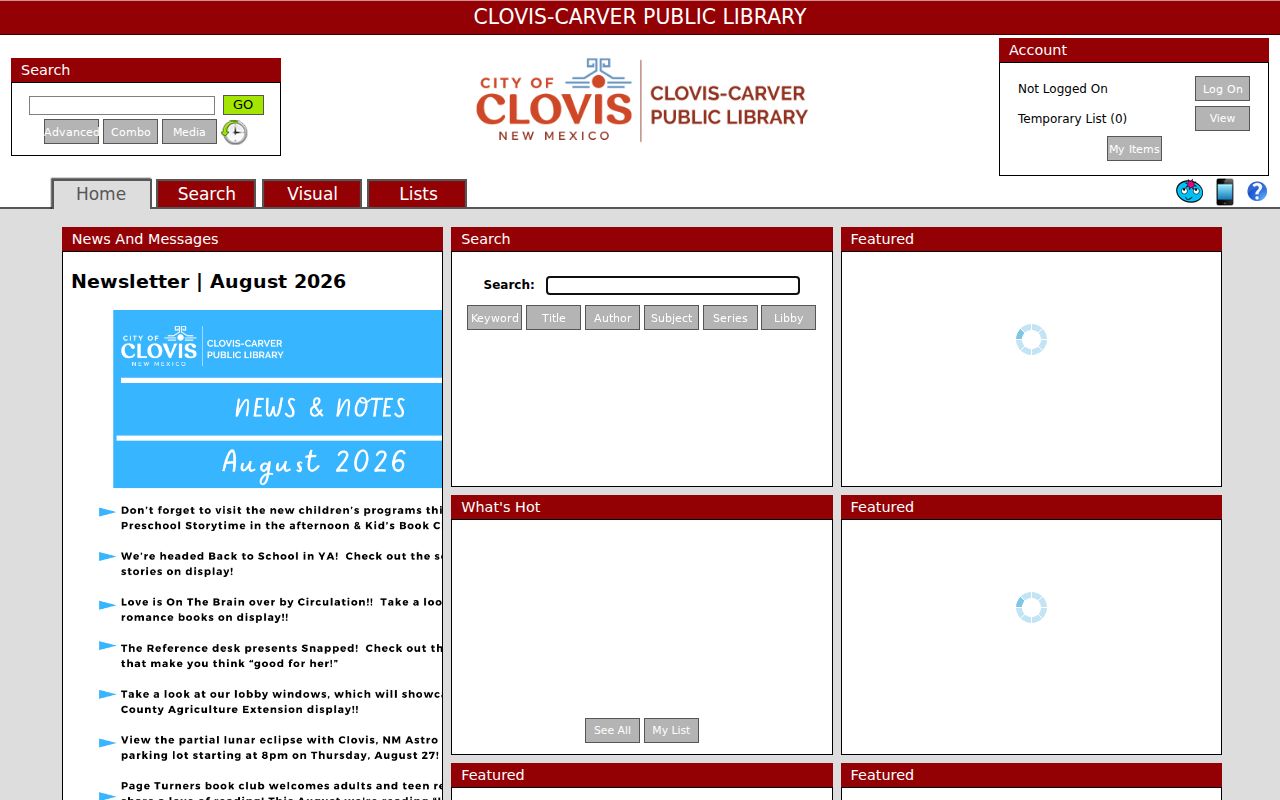
The catalog screen is a discovery tool. It does not establish every year held, a microfilm run, a reverse section, or the fields printed in an entry.
At the desk, ask whether a result is circulating, in the genealogy room, in closed stacks, on a reel, or an electronic image. Request the exact title, publisher or imprint, year, call number, access restriction, and any abbreviation key. The library’s public materials identify genealogy support but do not publish a shelf-by-shelf directory inventory.
Verified Clovis Directory Years
The four verified directory references, 1932, 1936, 1938, and 1941, should be treated as separate checks. A name missing from one does not establish that the person was absent from Clovis, and a name found in one does not establish later residence. Capture the page or image citation, the printed title, and the exact name rendering before comparing the result with another source.
The High Plains Historical Foundation and Curry County High Plains Pioneer Museum is a local access lead for this work.
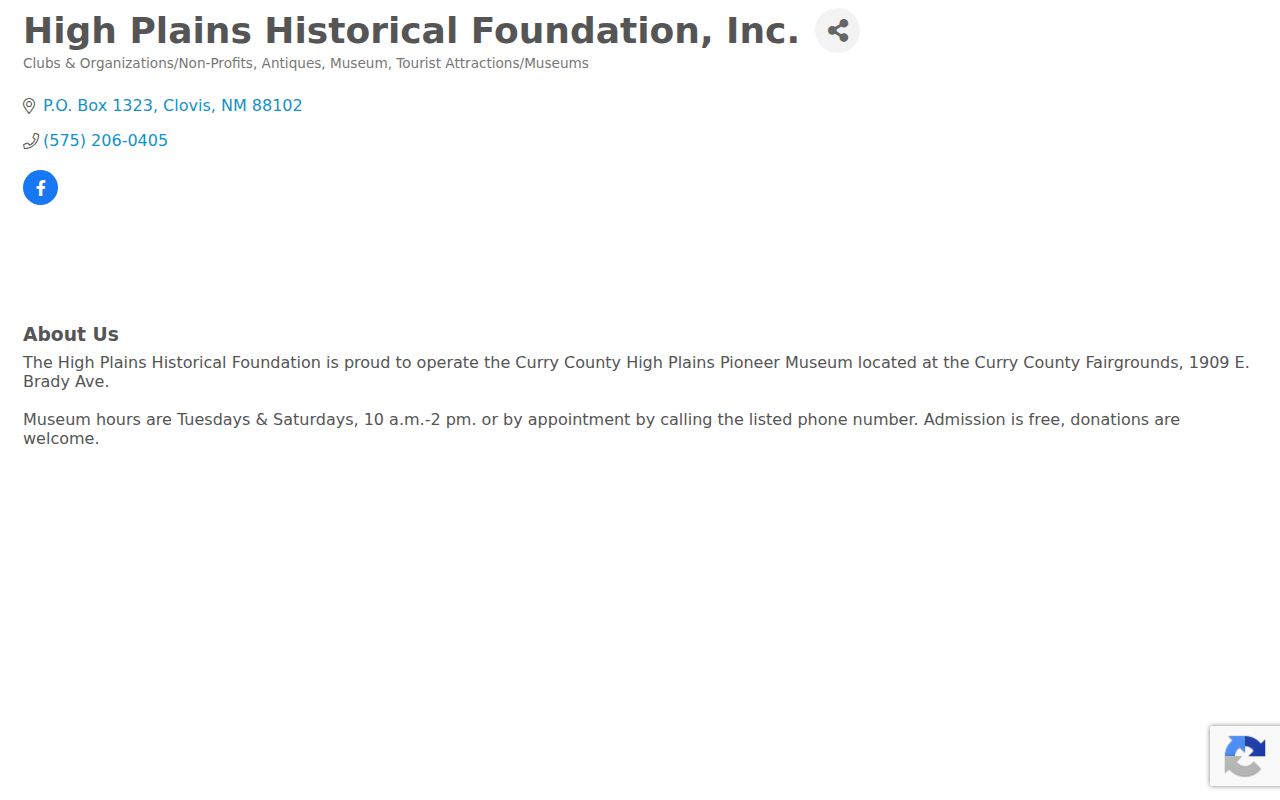
The Chamber listing places the museum at 1909 E. Brady and gives Tuesday and Saturday hours, with other visits by appointment. Confirm a specific directory, clipping, or map with museum staff before relying on its availability.
Note: The cited dates establish useful historical checkpoints, but they do not justify filling in unverified publication years between them.
Reading a Clovis Directory Entry
No digitized Clovis entry was available for direct inspection during the research. That means the entry layout, name order, relationship notation, address style, telephone line, cross-reference, abbreviation key, and any owner or boarding notation remain unconfirmed. Read the front matter before treating any abbreviation as a fact. Transcribe the printed entry exactly, including initials and punctuation, and retain the page or image reference with the search notes.
- Householder index
- An alphabetical listing arranged around the person or household identified by the publisher. Confirm how the particular volume uses the term before drawing a relationship conclusion.
- Criss-cross directory
- An address-oriented directory, if a volume actually includes one. No Clovis reverse or criss-cross run was verified online, so staff confirmation is necessary.
- Abbreviation key
- The publisher’s explanation of shortened words and marks. It is necessary before interpreting a role, address, or cross-reference.
- Directory citation
- The printed title, year, page or image, and repository details needed to find the same entry again.
A directory name is a lead for family research. Ownership should be checked against the parcel and recorded-document trail, while an address can be tested against period maps and released census material.
Six Clovis Sanborn Map Dates
Six cited Clovis Sanborn editions provide a concrete map sequence: 1909, 1912, 1919, 1929, 1951, and 1962. Maps establish a building footprint, use, block setting, or a change in the structure. They do not name the household. That distinction helps prevent a directory address from being attached to the wrong structure when a block changed over time.
- Find the address and original-townsite block or lot description.
- Check the map edition nearest to the directory year.
- Record whether the structure or block pattern fits the address reference.
- Pair the map with a directory, newspaper, census, or deed record for a person-level lead.
The Library of Congress digitized June 1912 volume contains five sheets and is the directly available online map in this sequence. The other cited dates should not be described as digitized unless a repository confirms that access.
Clovis News Before Curry County
The Clovis News began on May 1, 1907 and ran through March 28, 1929. Curry County was created in 1909, so early local notices can precede the county offices that later kept the deed and court trails. Search a surname, initials, street, organization, or OCR spelling variant in the Library of Congress record for the newspaper, then record the title, issue date, and page.
Newspaper notices are not conclusive identification. A social item, announcement, or property mention should be checked against a directory entry, map, parcel, recorded instrument, or released census schedule before it is treated as evidence about a household.
Tracing a Clovis City Directory Household
A careful household trail changes sources as the question changes. First normalize the street address and retain any legal description. Historic Clovis records can use original-townsite language rather than a modern street form. The NPS example of 308 Pile Street and Original Townsite Block 50, Lot 22 is a public historic-building example of why both descriptions should remain in the notes.
- Locate the exact directory year among the verified citations or catalog leads.
- Transcribe an inspected entry and its page or image citation without expanding unclear abbreviations.
- Use the closest Sanborn edition to test the building and block context.
- Search the period newspaper with surname, initials, address, and OCR variants.
- Pair the directory year with an available federal census schedule under the federal 72-year access rule.
- For later transfers, compare the legal description with the Curry County Clerk record trail.
Keep an evidence log that says whether each result supports residence, ownership, relationship, building context, or only a mention. That distinction prevents a city directory lead from becoming a stronger claim than the source supports.
Clovis Genealogy Room Workshops
Clovis-Carver’s Adult Services identifies a Genealogy room, and the City calendar posted Genealogy Workshops for June 20, July 18, and August 15, 2026 in the Ruth Wuori Room. Those offerings are a useful local channel when an online catalog result needs a real-volume check. They do not establish a complete directory database, an indexed obituary file, or one-on-one research availability.
Before visiting, use the Adult Services information and calendar to ask whether a particular directory, yearbook, newspaper, or map is on site and what access rules apply. The library is at 701 N. Main Street, with public hours Monday through Thursday from 9 a.m. to 8 p.m. and Friday through Saturday from 9 a.m. to 5 p.m.
Clovis Records After a Directory Lead
For a later property question, follow the legal description or Book/Page from the parcel record rather than assuming a street search will work. The Curry County parcel map can display a property address, legal description, Book/Page, named owner, co-owner, and a separately labeled mailing address. A mailing address is for notices and does not prove that the owner lived at the parcel.
The Curry County Clerk makes recorded-document index information available online from 1986 forward and provides public search terminals for older work. Its index is known to show grantor, grantee, recording date, and legal description. The County does not disclose sale prices in deeds, and a recorded party is not automatically a resident or a title conclusion.
City-held permits, code files, or archive material require a defined record request. The City Clerk’s IPRA process accepts a specific request through NextRequest or in writing, and New Mexico’s Inspection of Public Records Act is NMSA 1978 §§ 14-2-1 through 14-2-12. Ask for a record by address, date range, department, and record type rather than asking a custodian to conduct research.
The City Archive Center offers a separate discovery channel with keyword, archive, time-period, and date controls. A dated archive result can identify an agenda, notice, business-registration file, or public record series to request from the custodian. For material not found locally, the Library of Congress New Mexico genealogy guide points researchers toward state and local repositories, historical societies, State Archives, and the FamilySearch catalog. Much local material remains undigitized, so the library desk and repository contacts remain part of the search.